
What if healing involves more than what we can see, measure, or explain today?
For many people, energy healing begins as a personal experience: a sense of calm, greater clarity, less tension, or a feeling of being more connected to themselves. For years, experiences like these were often placed outside the conversation about science. That is beginning to change.
Researchers are increasingly studying practices commonly described as biofield therapies—a broad category that includes Reiki, Healing Touch, Therapeutic Touch, and other approaches in which a practitioner works with or around the human energy field. This does not mean that science has proven every claim made about energy healing. It does mean that the subject is being investigated seriously, with hundreds of clinical studies now mapped in the research literature.
How Much Research Is There?
A 2025 review of the clinical research landscape identified 353 biofield-therapy studies, including 255 randomized controlled trials. Nearly half of the studies summarized in their abstracts reported positive results across measured outcomes, while the authors also emphasized the need for stronger methods, clearer reporting, and more replication.
That balance matters. Curiosity does not require exaggeration. We can be open to promising findings while remaining honest about what is—and is not—known.
A Fascinating Pancreatic Cancer Cell Study
One of the most compelling recent studies came from researchers at MD Anderson Cancer Center and collaborating institutions. Published in 2024, the laboratory study examined whether biofield therapy was associated with measurable changes in human pancreatic cancer cells.
The researchers exposed pancreatic cancer cells to biofield therapy and evaluated cellular markers such as cytoskeletal changes, calcium uptake, cell-cycle activity, and electrical properties. They reported suppressed cancer-cell growth alongside measurable changes in cell cycle and voltage potential.
This is intriguing, but it is important to understand exactly what it means. The work was performed in laboratory cell models—not in people—and it does not show that energy healing cures pancreatic cancer. Preclinical findings are an early step. They can generate questions and justify further research, but they cannot replace clinical trials or conventional cancer care.
A newer follow-up investigation has also reported potential effects on growth and metastasis-related behavior in pancreatic cancer models, again calling for further study.
Where Reiki Fits In
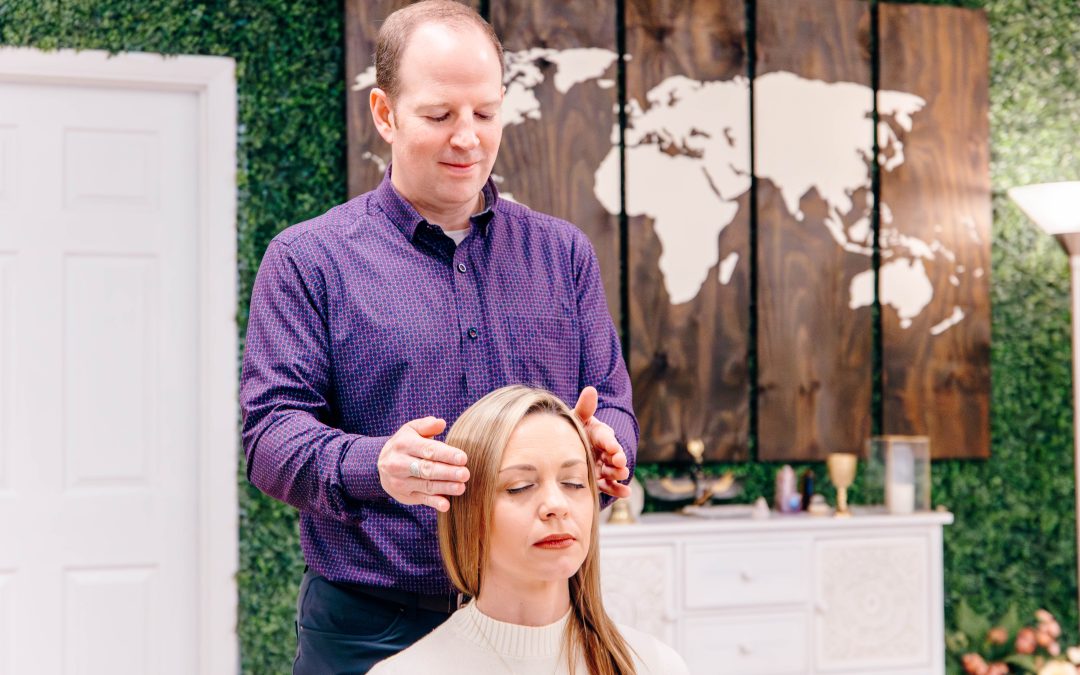
Reiki is one of the better-known forms of biofield therapy. During a session, the recipient remains fully clothed while the practitioner places their hands lightly on or just above the body. Many people describe the experience as deeply restful and centering.
Reviews of Reiki and related biofield therapies have explored outcomes including pain, anxiety, stress, fatigue, quality of life, and cancer-related symptoms. Some findings are encouraging, but the evidence is mixed and study quality varies. The most responsible conclusion is not that Reiki is a miracle cure. It is that it may be a meaningful complementary practice for well-being and symptom support, and that continued high-quality research is warranted.
At The Center at Keystone, our Ensofic Reiki sessions in Wyomissing are offered in that spirit: as a gentle, noninvasive way to support relaxation, balance, and a deeper connection with yourself.
What Does “Biofield” Mean?
The term biofield gives researchers a shared way to discuss the idea that living systems may involve organizing fields of information and energy. Some aspects of the body are already routinely measured electrically and magnetically, including heart and brain activity. Biofield research asks whether additional interactions may be occurring and whether they can be measured reliably.
The mechanisms proposed for practitioner-based energy healing remain unsettled. That uncertainty is not a reason to claim more than the evidence shows—but neither is it a reason to stop asking thoughtful questions.
Healing as a Complement, Not a Replacement
Energy healing should never be used as a substitute for appropriate medical evaluation, diagnosis, or treatment. If you have cancer or another serious health concern, work closely with your licensed medical team. Complementary practices should be discussed with your healthcare providers so they can be integrated safely.
At the same time, healing is not only about fighting disease. It may also involve creating more peace, reconnecting with purpose, reducing the weight of stress, and remembering that you are more than a diagnosis or a difficult season.
That is where practices such as Reiki, meditation, and Life Activation can offer a different kind of support—one centered on the whole person.
Stay Curious
I find this research exciting because it creates a bridge. It invites science to explore questions that many healing traditions have asked for centuries, while reminding practitioners to speak with care, humility, and integrity.
You do not have to choose between being spiritually open and scientifically thoughtful. You can be both.
If you are curious about what an energy-healing session may feel like, explore the healings offered at The Center at Keystone or schedule a discovery call. We can talk about what you are seeking and whether one of these sessions feels aligned for you.
Research and Further Reading
- Examining the effects of biofield therapy through simultaneous physiological and cellular measurements (2024)
- Full-text pancreatic cancer cell study in PMC
- Preclinical effects and mechanisms of biofield therapy on pancreatic cancer models
- Biofield Therapies Clinical Research Landscape (2025)
- Clinical Studies of Biofield Therapies
- Biofield therapies and cancer-related symptoms: a review
- Reiki and mental health symptoms above placebo: systematic review
Medical disclaimer: This article is for educational purposes only and is not medical advice. Energy healing and Reiki are complementary practices and are not intended to diagnose, treat, cure, or prevent disease. Never delay or replace care from a qualified healthcare professional.
Sounds interesting