
Have you ever said, “I would love to meditate, but I can’t stop thinking”?
I hear that all the time. Honestly, it may be the most common thing people tell me before attending a meditation class.
Most people assume they are doing meditation wrong because their minds are still active. They sit down, close their eyes, and within a few seconds they are thinking about work, dinner, an unfinished conversation, or the fifteen other things they need to do.
Here is the good news: you do not need to empty your mind to meditate. Meditation is a practice, not a performance. The goal is not to become perfect at having no thoughts. The goal is to learn how to work with your mind so that you can become calmer, clearer, and more present.
If you are new to meditation—or you have tried it before and struggled to stay consistent—this guide will help you begin in a way that feels realistic.
Why Meditation Can Feel Difficult at First
Meditation looks simple from the outside. You sit still, breathe, and become quiet. But when you actually try it, you quickly notice how much activity is happening inside you.
That does not mean meditation is not working. In many cases, you are simply becoming aware of thoughts that were already there.
I think of it like walking into a room where a television has been playing in the background. You may not have noticed the noise before, but once you decide to become quiet, it suddenly seems loud. Meditation helps you notice the noise without allowing it to run everything.
Over time, you learn that you do not have to follow every thought. You can notice it, let it pass, and return to your breath or the technique you are practicing.
Meditation for Beginners: Start Smaller Than You Think
One of the biggest mistakes beginners make is trying to do too much too quickly. They decide they are going to meditate for thirty minutes every day, miss the second or third day, and conclude that they are not disciplined enough.
Start with five minutes.
Five minutes is long enough to begin building the skill and short enough to fit into a normal day. Once five minutes feels comfortable, try seven or ten. Consistency matters more than forcing yourself through a long session that you dread.
Choose a time that already has a natural place in your routine. You might meditate after waking up, before leaving for work, after lunch, or before bed. When meditation is connected to something you already do, it becomes easier to remember.
A Simple Beginner Meditation Practice
You do not need special equipment or a perfect room. Find a place where you can sit comfortably and remain undisturbed for a few minutes.
- Sit comfortably. You can sit in a chair with your feet on the floor. You do not need to sit cross-legged.
- Set a timer for five minutes. This keeps you from wondering how much time has passed.
- Close your eyes and notice your breathing. Do not try to force your breath. Simply notice the inhale and the exhale.
- When your mind wanders, gently return. You will probably do this many times. Returning is part of the practice.
- Finish slowly. Take one deeper breath, open your eyes, and notice how you feel before moving on with your day.
If your mind wanders twenty times and you return twenty times, you did not fail twenty times. You practiced returning twenty times.
A Practical Way to Begin Meditating
If you would like guidance as you build this habit, download Dr. Bill Moss’s complimentary Meditation Starter Kit. It includes the Practical Peace guided meditation, a clear beginner’s guide, a seven-day practice tracker, and an invitation to experience Max Meditation in person.
You Do Not Have to Do It Alone
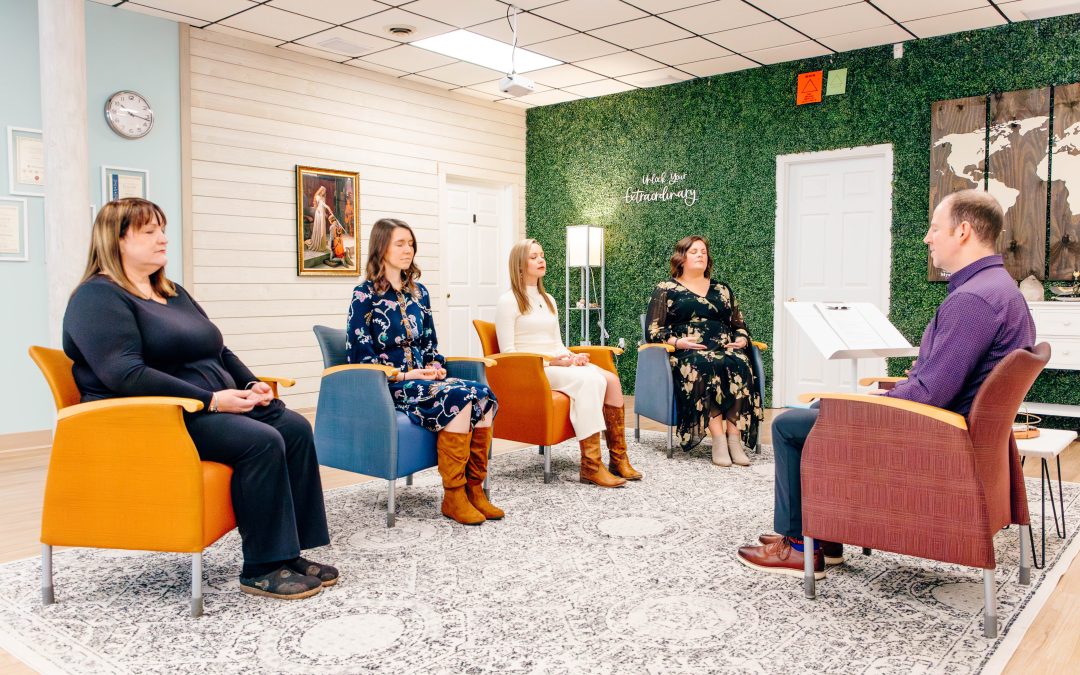
Many people find meditation easier when someone guides them through the process. A structured class removes the pressure of trying to remember what to do next. You can listen, follow the instructions, and experience the practice.
That is one reason I enjoy teaching the Max Meditation System™ at The Center at Keystone. It combines several meditation methods into one approachable system, including passive meditation, active meditation, guided visualization, deep relaxation, and energy balancing.
Beginners often finish class surprised by how quickly the hour passed. I regularly hear comments like, “That was easier than I expected,” or, “I think I actually did it.” Experienced meditators also appreciate the structure because it can add something new to a practice that has become repetitive.
You can also learn more about the system in my article, The Transformative Power of the Max Meditation System™.
What Usually Gets in the Way?
“I can’t stop thinking.”
You are not required to stop every thought. Notice that you became distracted and return to the practice. That moment of awareness is progress.
“I don’t have enough time.”
Begin with five minutes. Most of us lose more than five minutes each day scrolling, waiting, or moving between tasks. Meditation is not another demand on your schedule. It can help you meet the rest of your day with more clarity.
“I tried it once, and nothing happened.”
Meditation is like any other healthy practice. One session can feel wonderful, but the deeper benefit comes from repetition. Give yourself enough time to learn what your mind and body need.
“I’m not sure I’m doing it correctly.”
This is where guided meditation can help. A teacher gives you a structure, answers questions, and reminds you that your experience does not need to look like anyone else’s.
Listen: Meditation 101
Dr. Sean Carey and I explored these same challenges in Episode 17 of The Evolving Practice Podcast. We discussed common misconceptions about meditation, the belief that you must empty your mind, practical ways to begin, and what helps a meditation practice last.
Listen to Episode 17: Meditation 101
The conversation is a good reminder that meditation is not about becoming a different person. It is about creating enough quiet to become more aware of yourself.
Begin with the Free Meditation Starter Kit
If you want a practical structure before attending a class, begin with the complimentary Meditation Starter Kit. It was created for busy people who want more peace and clarity without stepping away from real life.
The kit includes the Practical Peace guided meditation, a professionally designed beginner’s guide, a seven-day practice tracker, and an invitation to experience Max Meditation in person.
Download the Free Meditation Starter Kit.
Join a Meditation Class in Wyomissing, Pennsylvania
If you are looking for meditation for beginners in Wyomissing, Reading, or the surrounding Berks County area, you are welcome at The Center at Keystone.
Max Meditation System™ classes are offered regularly at The Center at Keystone in Wyomissing, Pennsylvania. No previous meditation experience is required. Visit the class page below to view the next available date, current details, and registration information.
View the Max Meditation class details and reserve your place.
You do not have to wait until your mind is calm to begin meditating. You meditate so that you can develop a different relationship with the noise.
Start with five minutes. Let it be imperfect. Then come back tomorrow.